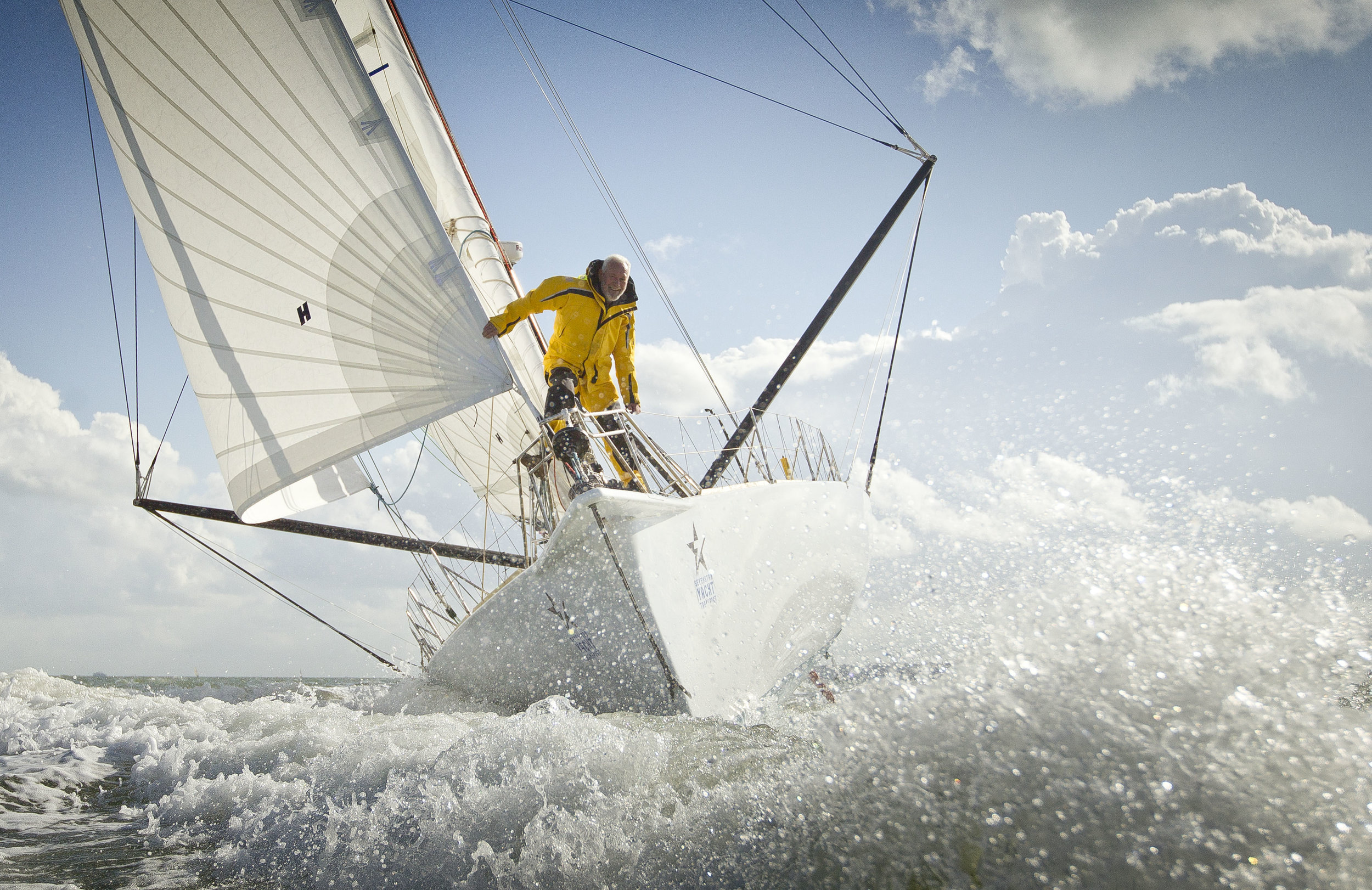
Clipper Ventures Plc
Image ©  Marinepics


The philosophy behind the Clipper races is that anyone can do them if they really want to. There are plenty of people who would like to achieve the ultimate in sailing, a circumnavigation, but either feel they do not have sufficient experience, or cannot afford a boat. Clipper provides the boats, professionally qualified skippers and a demanding training which turns novices into excellent racing seamen.

With a fleet of identical boats, the results are entirely due to the crews and some very close finishes have been recorded, just minutes separating boats after more than 3000 miles in some legs.


Clipper was originally established as Maiden International marketing, to provide boats and sell crew places for an around the world race being organised by Jimmy Cornell. When it proved impossible to participate in this event, an wholly owned around the world race, using eight new 60 foot yachts designed by David Pederick originally for Camper and Nicholson, was established. In 1996 William Ward bought out the two main owners of Maiden.

The first race was run in 1996/7 from Plymouth, calling at Madeira, Fort Lauderdale, Galapagos Islands, Hawaii, Yokohama, Shanghai, Hong Kong, Singapore, Seychelles, Durban, East London, Cape Town, Salvador, the Azores and back to Plymouth. It as won by Ariel Clipper, skipped by RAS Turner. In the first race approximately 32% of the crews were female.

Rather than have the boats sitting around for a four year cycle, RKJ and William ward decided to run the race every two years, and races have followed in 1998/9, 2000/01 and 2002/3. The 1998 winner was again Ariel, skippered by the 25 year old Alex Thomson. In 2000, when the boats had been adopted by Cities, Bristol Clipper skippered by Bob Beggs was the winner, but only just, from “Jersey Clipper” skippered by Paul de la Haye.

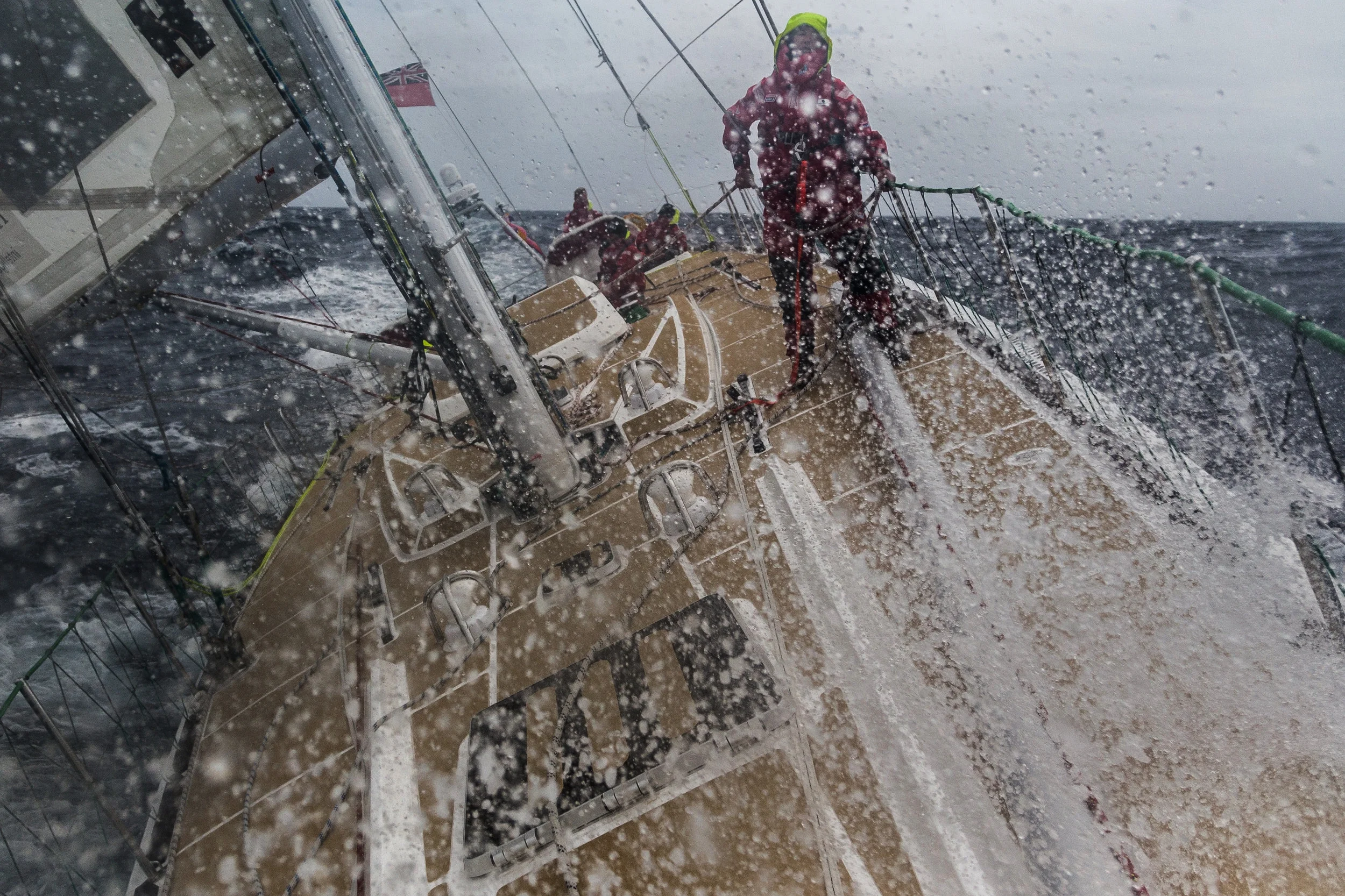
The Clipper route works on the principle that there is no rule that says you cannot race between nice places, but the crews cannot escape the wide variety of weather conditions to be found as they sail around the world. This variety though turns out crews who can handle confidently everything from Gales and Storms, to the intense concentration required to keep their boats moving in areas of calm conditions. It is an all round experience that produces good sailors and good seamen.

Over 80,000 spectators witnessed the thrilling conclusion of the Clipper 2002 Round the World Yacht Race in Liverpool's mighty River Mersey, with Cowes skipper Simon Rowell and his Jersey Clipper crew clinching the overall honours.

The end of this race is particularly poignant, as it is the last to be raced on the original Clipper 60 fleet. This truly is the end of an era, as the next Clipper race, setting sail in the Autumn of 2005, will be contested by ten new 68ft boats - each representing a different nation."

Looking ahead, the Clipper 2005 race will indeed be an all-new experience and will break with the established format of the four Clipper races run so far. New, faster yachts are being built, a new route has been planned, and there will be a new boat sponsorship formula, which will allow the race to become a truly international event.
Image ©  Marinepics


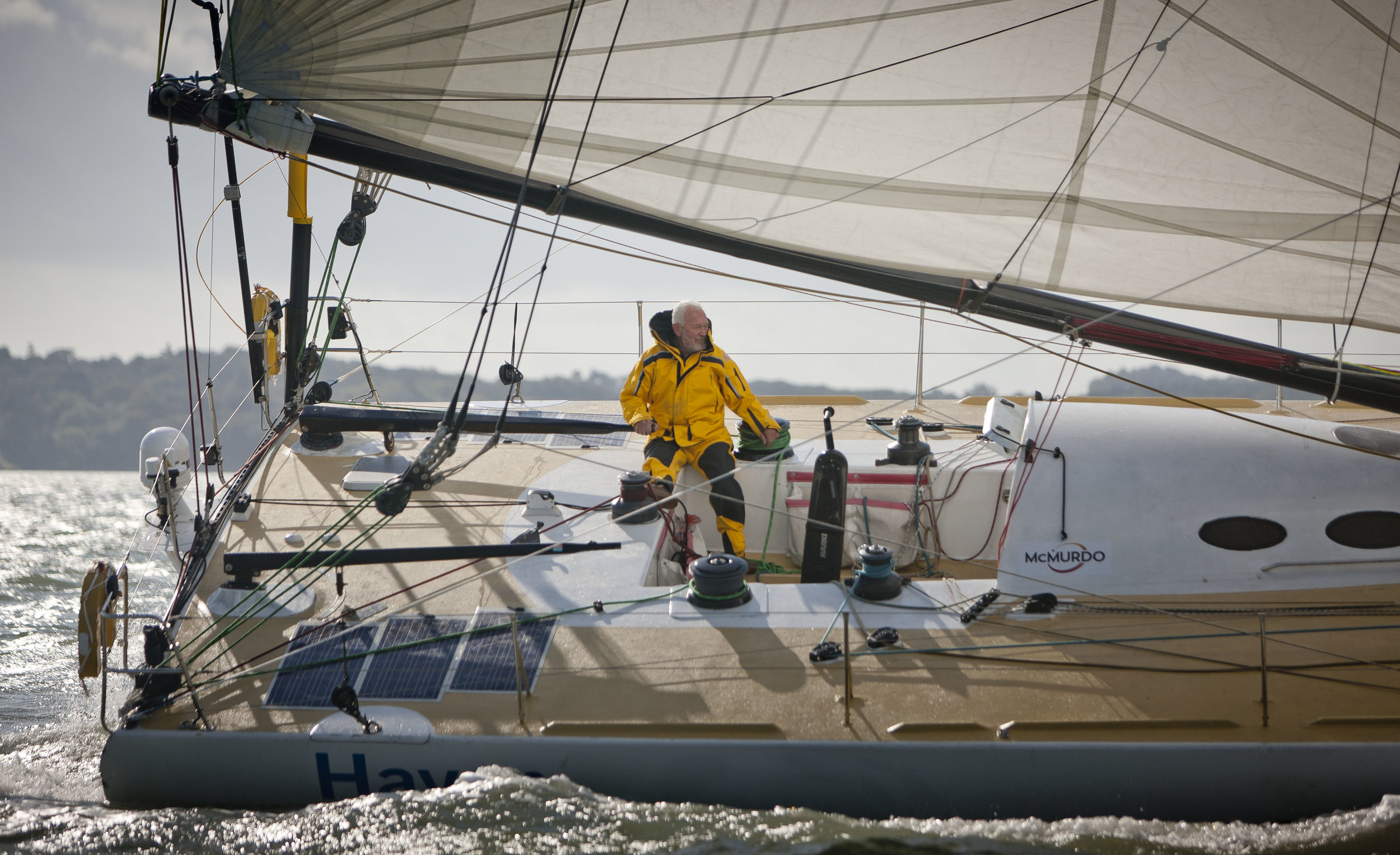
The new state-of-the-art boats are from the drawing board of celebrated yacht designer Ed Dubois. At 68ft long, they are 8ft longer than the highly successful Clipper 60s in use since 1996. Yet, despite their larger size, thanks to their epoxy/foam sandwich construction, they weigh two tons less than the yachts they are replacing.

Technically known as masthead cutters, these yachts have a taller rig and larger sail area. Longer hull, lighter construction and a greater sail area are all vital factors which individually will produce a faster boat -- put them together and the effect is appreciable.

The Clipper 68s incorporate all the lessons and ideas learned in more than 1.2 million miles of racing during the four Clipper circumnavigations run to date. Fast and steady down wind, their taller masts and higher aspect ratio sail plan make them very effective up wind and give an enhanced light
weather performance. To cope with the larger sails, aids such as coffee-grinder winches used on the America's Cup yachts are being fitted.

While not trying to produce a Volvo or Open 60 class of boat, which is specifically for professionals, the new Clipper 68s will provide their amateur crews with the fastest round the world ocean racers in the non-professional field.
Image ©  Marinepics

Each of the new yachts has a capacity for 20 people but will race with 17 crew. The accommodation, as would be expected for a yacht that is designed for fast, competitive passages, is stripped out. But each crew member has their own bunk and personal storage space, while the communal spaces allow relaxation after a hard watch on deck. The galley is simple but effective, as this is where the crew 'fuel up' with mental and physical energy. Success in a sailing race is not just a matter of muscles; it requires a great deal of thought and can be likened to a combination of push-ups and chess!

There is no point in sailing very fast in the wrong direction, so the navigation centre will have all the latest computerised aids to allow the crews to plan their tactics and plot their performance against their sisters. When identical boats are racing against each other, the difference between first and second place lies entirely with the crews. Placing the boat so it can have favourable winds tomorrow, the next day and the week ahead is the ultimate skill in ocean racing.

Built to the latest Maritime and Coastguard Agency construction and safety requirements, these exciting new yachts will start coming into service in 2004. They will provide the crews with an unprecedented challenge, which has up until now only been available to hardened professionals.

The increased capabilities of the new boats have also allowed the development of a newly ambitious and challenging route for the 2005 race. Starting from the UK with a short, warm-up sprint to a Western European port, the course will then take the crews on their first big ocean race across the Equator to Brazil.

Following a crew change, the fleet will set off across the South Atlantic and around the Cape of Good Hope for a South African stop in the southern Spring. The yachts then dive south to the Roaring Forties for a Southern Ocean sleigh ride to the West Coast of Australia and an Antipodean Christmas.

The Islands of Indonesia beckon next as the crews race north towards China where additional crews will join in February for another high wind, high speed blast across the top of the North Pacific. The penultimate leg will then see the teams race down the west coast for a stopover in Panama City and a transit of the famous Canal, followed by a sprint race across the Caribbean.

The final crew change will then take place for the crews who will be joining to race the yachts up the East Coast of the states and back across the Atlantic for the glorious homecoming in the summer of 2006.

This route is the longest of all the round the world races and crews that were novices at the start will have become seasoned veterans by the end of it.

A new boat sponsorship format means that city will still compete against city, but now they will represent their country as well. This means that cities around the world will have the opportunity of promoting themselves at each of the stopover ports as the fleet forges its way around the world, making the race a truly international event. It's an unusual way of promoting a city and its industries, but its uniqueness is what provides its attraction.

Clipper Ventures also owns the 5-Oceans Race, which was started in 1982 as the BOC Challenge and later became known as Around Alone. This is a single handed race around the world with a number of stops and will take place next in 2006. It is open to IMOCA rated yachts of 50 and 60 feet.
Top of Page
© Copyright 2006 Sir Robin Knox-Johnston Website design by greendesign of Southampton